GradePro

Wes Cossick, Head of Product & Engineering

Houston, TX
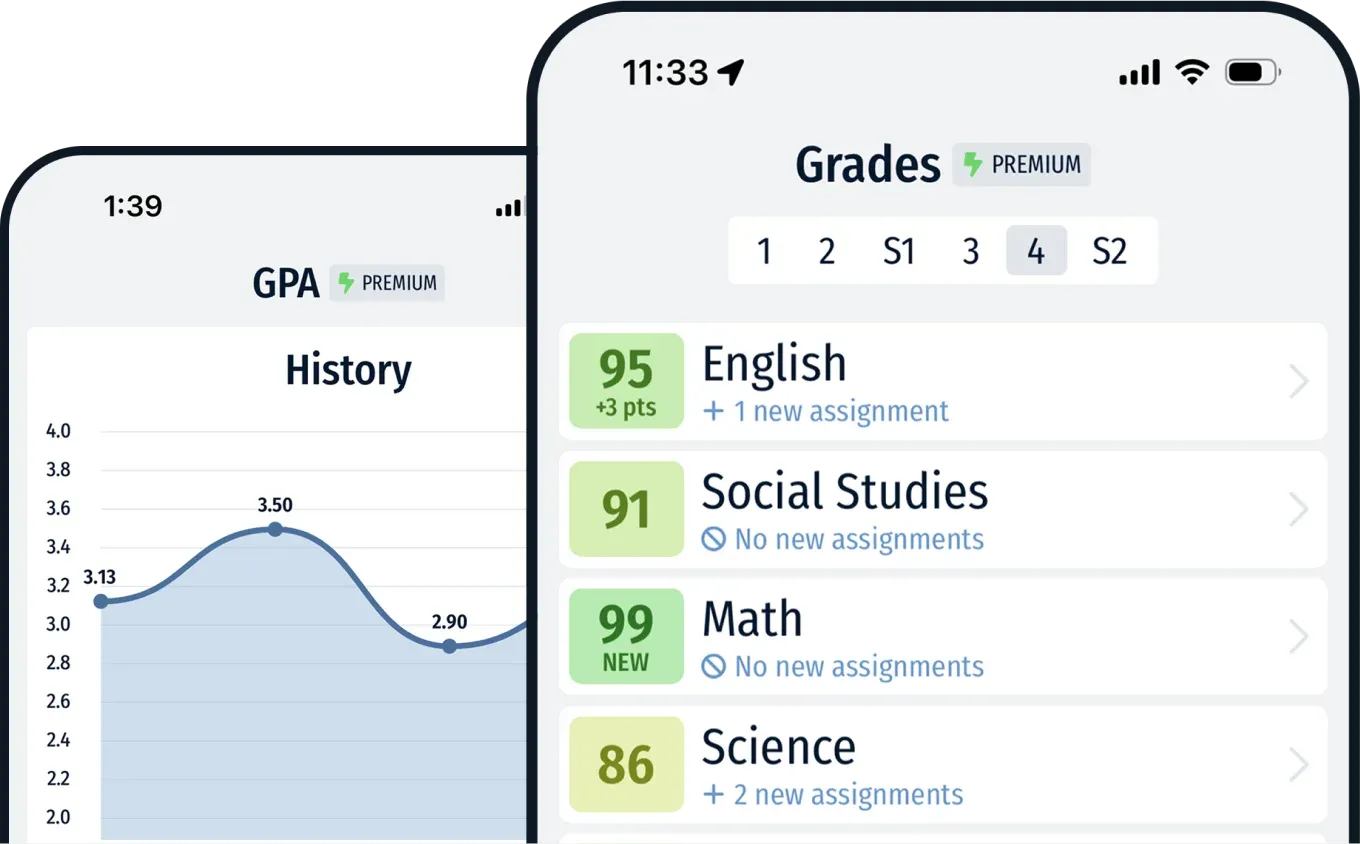
GradePro brings grades, attendance, and class progress all into one mobile app. The GradePro app helps students track their GPA and stay on top of their academic progress right from their phones.
A high school problem worth solving

Think back to your high school self for a minute: yes, include the questionable haircut, and the clothes that you swore looked good.

Whatever regrettable style choices come to mind, grades were likely part of your memories too. And, for better or for worse, they sure had a way of taking center stage in any responsible student’s life.

A test score could change the entire vibe of your day, or you miss one assignment and your class average tanks. And then there’s your cumulative GPA, something that could change the whole situation in the blink of an eye: on track one day, cramming the next.

All this information was technically available to Wes, of course. But the catch was, it was likely tucked away in some database somewhere, not exactly easy to get to.

“The school district that I attended had an online gradebook,” Wes says, referring to the software schools use to manage grades and assignments, “but it didn’t even offer a mobile-friendly web page, let alone any kind of app.”

GradePro was Wes’ solution to all this, his side project back then, built by a student for students, and who just knew that there had to be a better way to check his own grades.

At first, he showed it to friends and family. Then, his classmates saw it. Their responses were pretty unanimous: they wanted to use it too.

That’s when things really started to snowball. Students at Wes’s own school started using it. Next thing he knew, students at other schools got on board; people Wes didn’t even know.

Eventually, GradePro was reaching students across the city, then the state, and ultimately the country.

Today, K-12 students (and their parents) from all walks of life use GradePro to check on grades from their phones, anywhere, anytime. They can calculate their GPA, get notifications when something changes, even use its selection of “what if” tools to predict what scores they need to attain a certain GPA.

“It’s something you usually want to be able to check on your phone,” Wes explains. “Your grades, your assignments, your class averages as a student, your GPA. It’s really easy to do that on your phone if you have the right app to do it.”

And Wes is proud to present GradePro as that app to help students everywhere.

In fact, in some districts, GradePro has become such an integral part of how students and parents stay on top of their grades, that downloading GradePro is just something that’s par for the course, practically a prereq for the curriculum.

And for Wes, his satisfaction comes from a student saying the app helped them stay on top of their work. Or the review that mentions how helpful it is that the app’s free.

“We’ve even seen people mention their grades are better because they’re on top of it more. And I like seeing that,” Wes adds. “We’re helping students be more successful in school.”
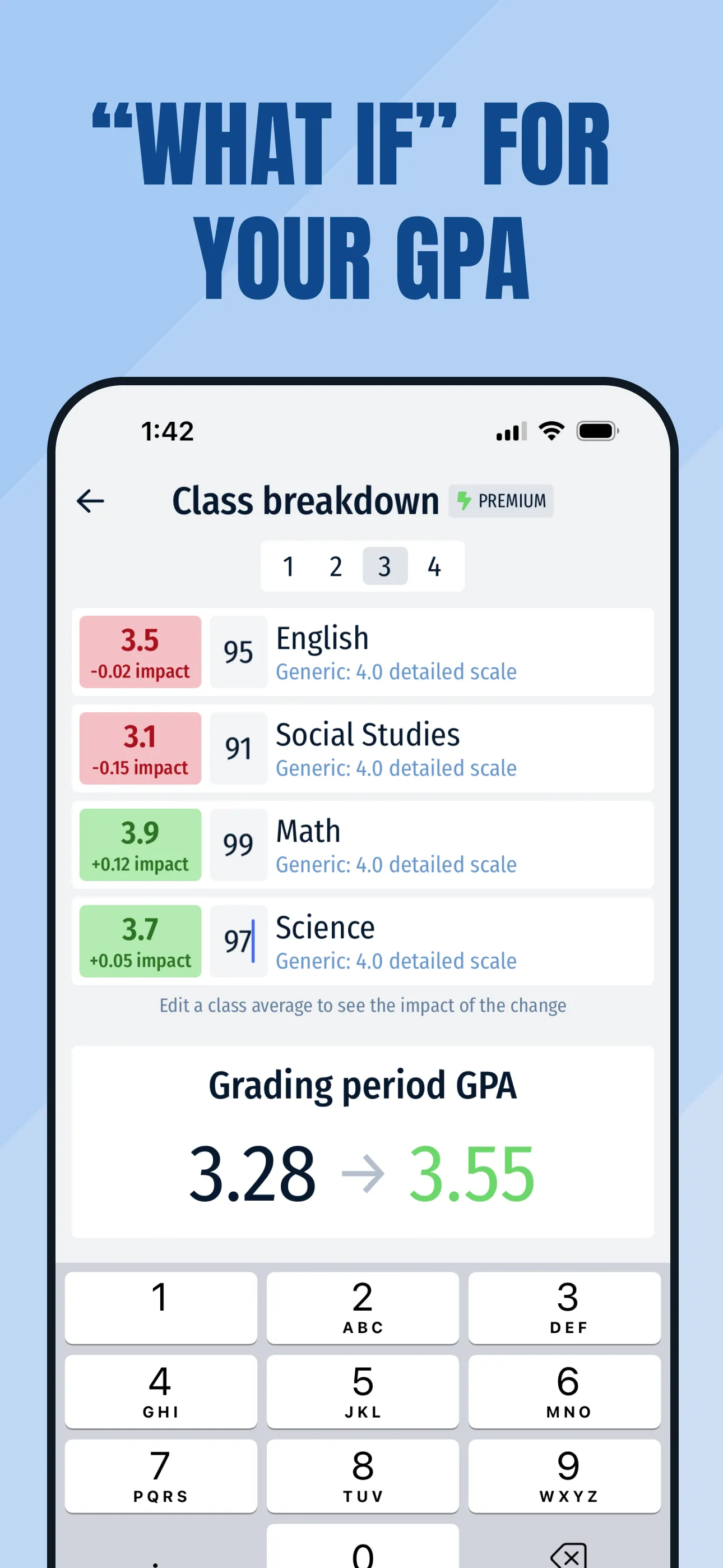

GradePro’s “what if” tools help students figure out how future grades can potentially affect their GPA.
No payment, no problem

As more and more students and their families started using GradePro, Wes had to figure out a way to support it.

“It was a lot of effort to build an app and to maintain it,” Wes explains, “especially if I was doing it in a way that would be suitable for a wide range of other people.”

But asking students to fork over money, especially if they were his own classmates and friends, didn’t sit right with Wes. “It felt kind of weird charging people that I knew for extra features,” he says. “So I started with ads.”

And so around 2014, not long after launching, GradePro began monetizing with ads by integrating with Google AdMob. When asked why he chose AdMob, Wes answered point blank: it was easy.

“AdMob was just the easiest to set up,” Wes elaborates. “Very easy to implement and incorporate into the app.”

Now, more than a decade later, GradePro has grown from a high schooler’s extracurricular activity into a full fledged app business that’s supported by a small team, still using AdMob for its in-app advertising needs, with Wes now as Head of Product & Engineering.

Wes insists that AdMob remains just as easy to use as ever, plus it’s got powerful mediation features, a way to help Wes and his crew work with other ad networks to fill GradePro’s ad slots.

But the biggest reason GradePro uses AdMob is still all about keeping access open for all.

GradePro serves K-12 students, many of whom don’t have ready access to a payment card. Many don’t even have a job or income yet. But that shouldn’t mean they’re shut out from understanding how they’re doing in school — not if Wes has anything to say about it.

“It would not make a lot of economic sense to offer the app for free like we do to students if we did not have the advertising revenue,” he says.

“It would not make a lot of economic sense to offer the app for free like we do to students if we did not have the advertising revenue.”
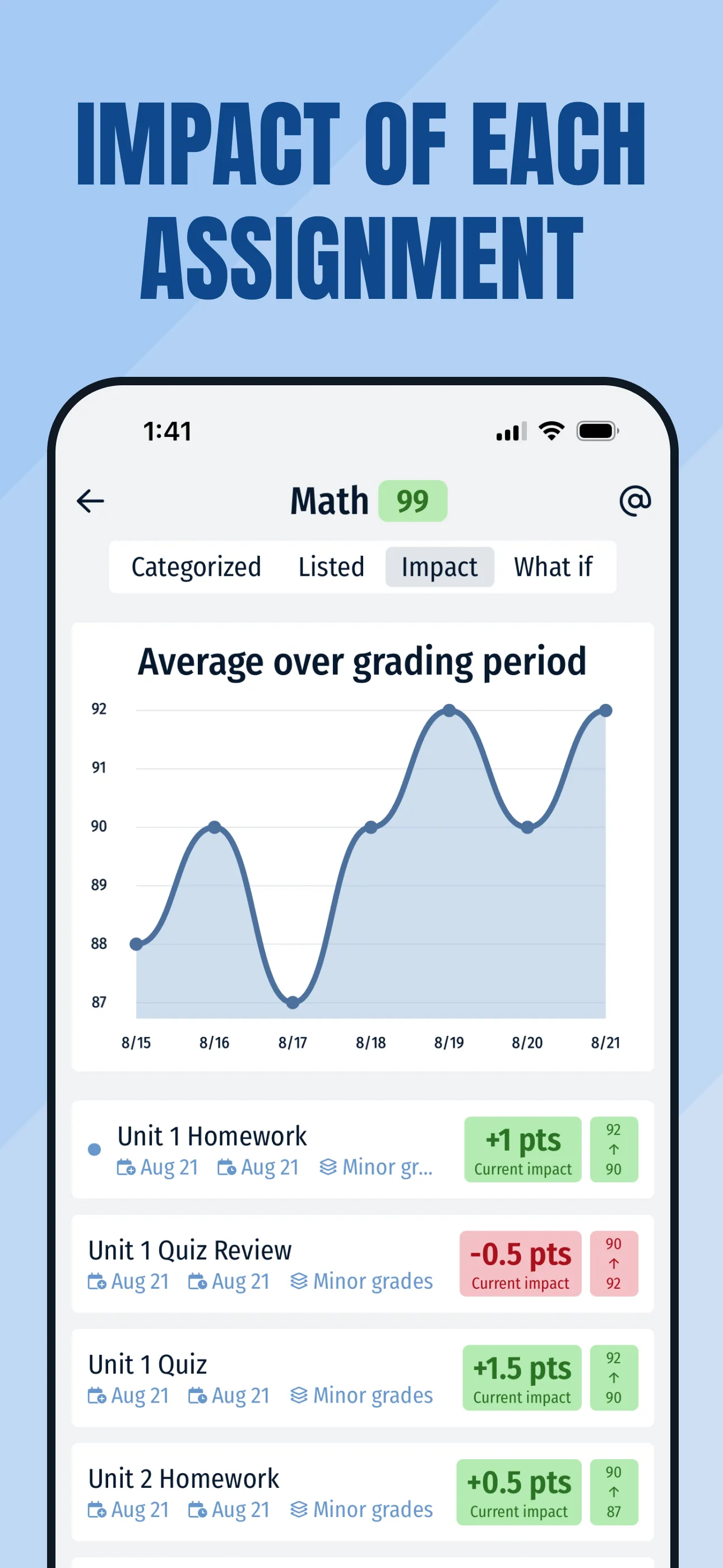
GradePro shows students how each assignment can affect their class average.
Still improving the grade

When Wes looks back on it all and takes stock, he’s proud to say that GradePro has now been “loved and trusted” by more than 1 million students and parents.

“One of the coolest milestones was making the jump to be able to support other gradebook systems,” Wes continues. “Now GradePro supports something like more than 10 different gradebook systems.”

And while GradePro is used mostly in the United States, Wes says the app has started to gain traction in other countries. As long as the school uses a compatible gradebook system, GradePro is ready to support them.

Just recently, the team released version 8 of GradePro, the app’s biggest redesign yet, according to Wes. “Totally new fresh coat of paint and UI. We’re really proud of it,” he says.

More than anything, v8 also gives the team a foundation to build what’s next for GradePro. They want to make the dashboard more useful for one, including bringing some dashboard features into other places, such as widgets.

“We’ve got some pretty cool ideas in the works,” he teases. “A lot of which have been suggested by users in the past.”

GradePro also takes the responsibility that comes with serving a younger audience very seriously.

In fact, Wes says they consult often with data privacy attorneys, making sure they stay compliant with state regulations, building GradePro with youth safety and privacy top of mind.

That work may be less obvious than, say, a redesign or a dashboard, but when you’re working with K-12 students and their families, trust and privacy are everything.

And like many app development teams out there, GradePro is also starting to test out AI in production. For Wes and his team, so far it’s mostly been isolated to such tasks as writing and reviewing code, but that’s already making a dent.

“We can build some new features that we got as feedback from a user or a customer,” Wes says, “and then we can have that out to users in a matter of days.”

As Wes thinks about the next chapter for GradePro, he wants to keep expanding: more schools, more districts, more gradebook systems, more features that help students understand their academic standing and progress.

And despite all that’s changed since he was in high school, through GradePro, Wes and his team are still helping students answer the same age-old question: how am I doing, and what can I do next to improve?

About the Publisher

Wes Cossick is Head of Product & Engineering at GradePro, a mobile app that helps K-12 students and parents keep tabs on grades, assignments, class averages, and GPAs, all from the convenience of their phones. Wes first built the app when he was in high school trying to solve a problem he was having firsthand: needing an easier way to see where he stood academically. Today, GradePro is supported by a small team alongside Wes, and made free to students everywhere, thanks to the support of advertising.

Head of Engineering at GradePro Wes Cossick actually built the first version of the app as a high school student.