CrowdLotto

Yang Wang, Founder

Dublin, California
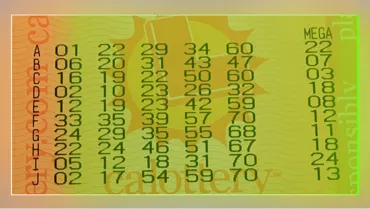
Lotto Monkey is CrowdLotto’s mobile app for scanning printed lottery tickets and checking results with AI. CrowdLotto’s Lotto Monkey app scans a printed lottery ticket using AI image recognition and OCR technology.
A ticket to smarter scanning

If you talk to its founder Yang Wang, you’d quickly pick up that there’s a funny little contradiction when you peek behind the curtain of his mobile app company CrowdLotto.

And that’s because, for a company with apps built specifically for lottery players, you’d actually be hard pressed to find any lotto players among the bunch, Yang included.

“Though I did buy tickets to test the app,” he quickly appends.

What Yang does love, however, is the technology itself. He studied computer science and tends to think in terms of systems and views everything through an engineer’s lens.

To understand how CrowdLotto got its start, you’d have to turn back the clock, to those early days of AI, before large language models were even part of our everyday vernacular, and before a phone could recognize practically anything you pointed it at.

But that’s precisely what Yang and his partners were trying to figure out back in the day: image recognition, or to put it more technically, optical character recognition (OCR). AI wasn’t trained to handle manual handwriting well enough just yet, but printed, more standardized text; that might be doable.

So they went looking for any kind of printed text that everyday folks might need help reading.

Then it hit them: lotto tickets.

Sure, if you had one ticket, the task of checking the numbers was easy enough. But a stack of tickets? That’s a more annoying chore to handle, they thought to themselves. Then add group lottery play to the mix, and things can become more complicated quickly.

“People often play together,” Yang shares. “You need scanning, financial management, messaging, everything combined together.”

So armed with these insights and their brand of OCR technology, the team went ahead and built Lotto Monkey, an app where individual players can scan their own lottery tickets.

Then shortly after that, they shipped another app, one called Smart Captain, this one specifically built for people managing pools of players instead.

Now, here’s the part where Yang gets quite candid about the startup lesson he takes away from all this. The usual formula: start with a problem, then apply the technology, wasn’t necessarily followed here.

And Yang is first to admit how he and his co-founders did it all “backwards.”

“Don’t pick the technology and try to figure out the problem. You should have the pain point first, then find the right technology to address it,” he expounds.

But right path or not, it still led him to create a real app with real users and real lessons about how people actually use technology to help unburden themselves of the ordinary hassles that life tends to always throw at us.


Lotto Monkey helps players review scanned tickets and check lottery results for free thanks to in-app advertising.
Check the lines (of revenue)

When it came time to consider the business model behind an app such as Lotto Monkey, Yang and the gang did it the so-called “right” way that time. In other words, they thought about the users first, how people would use the app.

Some users might be regular lottery players. Others might only find the app when the jackpot’s just too big to ignore. Still, some might scan a few tickets, while others might be part of a larger group instead.

But whatever kind of lotto player they were, CrowdLotto had to figure somehow to earn revenue without charging them from the get go.

Yang eventually landed on two kinds of revenue streams: in-app purchases and in-app advertising.

As for the ads component, the team chose AdMob to be their monetization partner. “AdMob was built for mobile. The brand name was great, it was acquired by Google. We integrated it, and it worked well.”

The ad-supported model eventually ended up becoming a big part of the business too. In fact, Yang says that in the past decade, in-app purchases and ad revenue have been a roughly even split.

But ads are what help CrowdLotto keep Lotto Monkey and Smart Captain free and accessible to all, while still giving the developer revenue to pay the team (in this case, an army of freelancers), cover operational costs such as server hosting and marketing, as well as reinvest into the business.

For an app like Lotto Monkey, that means that anyone can just open the app whenever, jackpot frenzy or not, scan a ticket, and get value without first having to pay anything out of pocket (other than the lotto ticket itself, of course).

And for Yang, that meant he could keep the business running, while he and the team focused on any technical problems that were bound to come up: improving ticket recognition, adapting to different state lottery formats, debugging crashes, just to name a few.

“AdMob was built for mobile. The brand name was great, it was acquired by Google. We integrated it, and it worked well.”
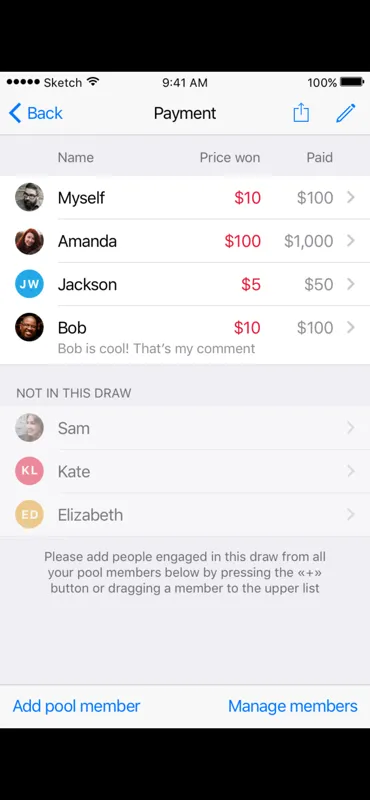
Smart Captain helps lottery pool managers track payments and winnings for free with the help of advertising revenue.
From better scans to faster builds

Those technical challenges tend to add up, but for Yang, it’s all part of CrowdLotto’s decade-long story.

As a matter of fact, he has a big stack of memories to draw from, like that one time, during one of those sky high Powerball jackpots, people were using his apps so much that the servers went down.

“When it gets to the point where it’s a billion-dollar-plus jackpot, that can crash the servers. That massive surge pushed us to tighten our systems, making the app highly reliable today,” Yang recollects.

Other times, it’s just tech support.

Most users don’t tend to write in and let him know that they’d won some life-changing money (though Yang sure wishes they did).

Instead, they write to let him know that a scan had failed, or because a ticket format from their state wasn’t working right. Yang makes it easy for them to do so too, just by tapping a convenient feedback button in the app, then attaching any relevant images.

But that type of feedback is also a big help, especially when it comes to fine tuning the AI.

“Different states have different layouts, different text formats, different fonts,” Yang explains. “We relied on that channel to collect tickets from across the United States and improve.”

The team would take a closer look at those examples, tweak the AI algorithm, update the app, and ask users to try again.

These days, Yang likes to say that Lotto Monkey is in a kind of “maintenance mode.”

It continues to support US-based lottery use for the most part, especially Powerball and Mega Millions, but Yang is now more focused on a new venture, this one in the trendy new area of “agentic commerce” (where AI agents autonomously manage shopping, selling, and payments across consumers, merchants, and financial institutions).

He’s also been leaning on AI coding agents to build and prototype faster than ever before, introducing apps into other marketplaces such as ChatGPT, Shopify, and Microsoft 365 in a relatively rapid clip.

“AI tools are a lifesaver,” Yang says. “For entrepreneurs, this is the best time to build.”

Yang knows not every project becomes a hit, or as they say in Silicon Valley a “unicorn” (any startup valued at $1 billion or more). Luck matters. Timing matters. Market size matters. But at least, he knows the part a builder such as himself can control.

“Whatever you are interested in, do it,” he says. “It’s really fun. Just do it.”

About the Publisher

Yang Wang is the founder of CrowdLotto, the company behind Lotto Monkey, an AI-powered lottery ticket scanning app. A computer scientist by training, he’s based in the Bay Area and has spent the last decade using AI to help address real-world consumer issues, and leaning on ads to support and grow his business. Today, he builds AI-driven transaction infrastructure and intelligent fintech solutions for agentic commerce.

Founder of CrowdLotto Yang Wang built Lotto Monkey to apply AI vision technology to lottery ticket scanning.